





Anatolia’s Hidden Evolutionary Laboratory: Are Blind Mole Rats Actually Multiple Species?
Professor Ferhat Matur, a lecturer in the Department of Molecular Biology and Genetics at the Department of Biology, Dokuz Eylül University, has discovered 17 of the more than 30 known species of blind mole rats in Anatolia. Furthermore, through his research, he has demonstrated that species we previously regarded as subspecies or the same species have actually evolved into entirely new species, and that blind moles can evolve very rapidly under suitable environmental conditions. In this article, I will outline the work carried out by Prof. Dr. Ferhat Matur and his colleagues.
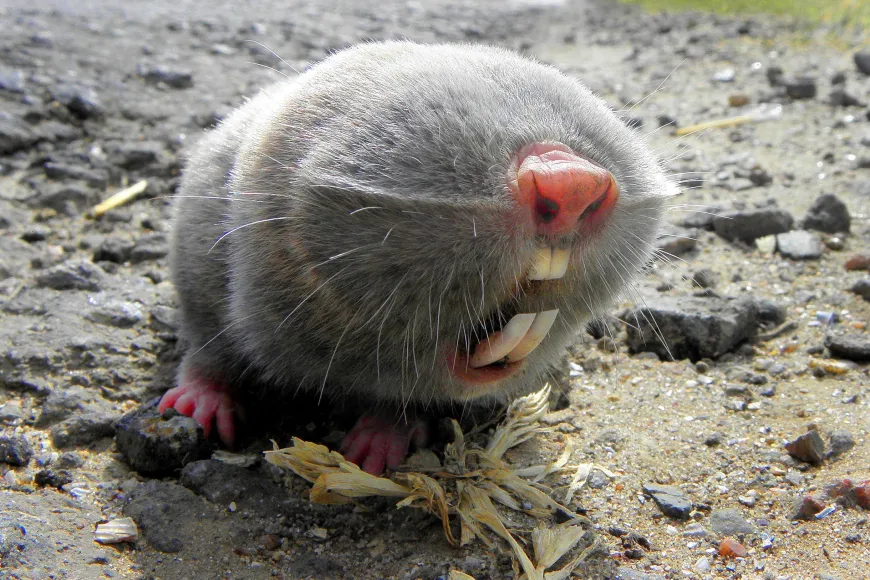
For decades, blind mole rats living in Türkiye were considered a single species. However, recent scientific studies suggest the situation is far more complex.
Modern research now shows that:
Blind mole rats in Anatolia may actually consist of multiple independent species.
And these differences are not only visible at the genetic level — they also appear in:
- chromosome structures,
- molecular systems,
- and cellular mechanisms.
A Chromosomal Explosion in Blind Mole Rats
Prof. Dr. Ferhat Matur and his colleagues conducted a large-scale field study on blind mole rats in Western Anatolia.
The research included:
- 121 blind mole rats
- collected from 54 different localities
Researchers analyzed:
- diploid chromosome numbers (2n),
- chromosome arm numbers (NF),
- and sex chromosomes (X and Y).
The Result: Massive Genetic Diversity
The study identified 7 different chromosomal types (cytotypes):
- 2n = 36
- 2n = 38
- 2n = 40
- 2n = 50
- 2n = 52
- 2n = 56
- 2n = 60
This finding is extremely important in evolutionary biology.
Normally:
Individuals belonging to the same species tend to share very similar chromosome structures.
But blind mole rats challenge this rule.
They Look Similar — But May Not Be the Same Species
One of the most striking conclusions of these studies is:
Blind mole rats that appear identical externally may actually be genetically isolated from one another.
Scientists refer to this phenomenon as:
Cryptic species
In other words, animals that look almost identical may possess:
- different chromosome systems,
- different genetic lineages,
- and separate evolutionary histories.
Why Is Anatolia So Important?
Research suggests that Anatolia functions as a:
Natural evolutionary laboratory
for blind mole rats.
The main reason is:
Geographic isolation
Blind mole rats:
- live underground,
- move very little,
- and exist in isolated populations.
Mountains, valleys, rivers, and islands prevent gene flow between groups.
As a result:
Each isolated population follows its own evolutionary path.
Even Islands Preserve Evolutionary Signatures
Prof. Dr. Ferhat Matur also examined populations from:
- Gökçeada
- Bozcaada
These island populations remained genetically isolated for long periods and preserved unique chromosomal structures.
This demonstrates how geographic separation accelerates speciation in Anatolia.
It’s Not Just the Chromosome Number — Structure Matters Too
One of the most important discoveries was this:
Even populations with the same chromosome number are not necessarily identical.
For example:
Two different populations may both have:
2n = 60
Yet their chromosome organization can be completely different.
Prof. Dr. Ferhat Matur observed structural variations such as:
- metacentric chromosomes,
- submetacentric chromosomes,
- and acrocentric chromosomes.
This means:
Chromosome organization itself plays a major role in speciation.

The Mechanism Behind Speciation
These studies strongly support a model known as:
Peripatric speciation
According to this model:
- A small population becomes isolated
- Geographic separation limits gene flow
- Chromosomal mutations accumulate
- A new species gradually emerges
Blind mole rats may represent one of the clearest living examples of this process.
A Surprising Discovery During Meiosis
Recent studies also investigated what happens inside the cells of blind mole rats during meiosis.
The main focus was:
RNA Polymerase II (RNAPII)
This enzyme is responsible for:
Transcribing DNA into RNA.
In simple terms, it controls gene activity.
Blind Mole Rats Break the Classical Model
In laboratory mice, gene activity during meiosis usually follows a pattern of:
OFF → sudden ON activation
But blind mole rats do not follow this system.
Prof. Dr. Ferhat Matur and his colleagues discovered that:
Gene activity increases gradually instead of suddenly.
The progression looks like this:
- leptotene → low activity
- zygotene → increased activity
- pachytene → even higher activity
This suggests that blind mole rats possess an unusual transcriptional regulation system compared to other mammals.
Mysterious RNA Polymerase II Accumulation at Telomeres
One of the most fascinating findings involved telomeres.
What are telomeres?
They are the protective ends of chromosomes.
Researchers found that:
- the RNAPII-Ser5 form continuously accumulates at telomeres,
- while the active RNAPII-Ser2 form is mostly absent.
This suggests:
The transcription machinery is “ready,” but not fully active.
Prof. Dr. Ferhat Matur and his colleagues describe this as the:
Paused polymerase model
In this model, the enzyme initiates transcription but remains temporarily halted.
X and Y Chromosomes Behave Differently
Studies also revealed unusual behavior in the sex chromosomes of male blind mole rats.
Some cells showed:
- active transcription signals,
- while others appeared transcriptionally suppressed.
This indicates:
Gene silencing mechanisms in blind mole rats are highly dynamic.
The “Single Species” Idea Is Collapsing
Modern integrative studies now argue that:
Anatolian blind mole rats do not represent a single species.
Prof. Dr. Ferhat Matur and his colleagues combined:
- DNA sequencing,
- skull morphology,
- chromosome analyses,
- and geographic distribution data.
The conclusion:
Many populations should likely be classified as independent species.
The Impact of Ice Ages
Studies focusing on the widespread:
2n = 54
chromosomal group revealed the influence of ancient climate events.
Prof. Dr. Ferhat Matur and his colleagues identified:
- a Northern lineage
- and a Southern lineage
These groups were likely separated by major geographic barriers such as:
The Anatolian Diagonal
Ice Age isolation may have accelerated genetic divergence between populations.
Anatolia: A Hidden Biodiversity Treasure
The overall conclusion of these studies is clear:
Blind mole rats may be among the most important mammalian models for studying evolution.
These animals allow scientists to investigate:
- chromosome evolution,
- speciation,
- genetic isolation,
- and cellular adaptation
in real time.
And at the center of this evolutionary story lies:
Anatolia
Short Summary
Scientific studies suggest that blind mole rats in Anatolia are not a single species but a complex group of genetically distinct lineages shaped by chromosomal evolution and geographic isolation. Researchers also discovered unusual cellular and molecular mechanisms in these animals, indicating that their biology differs significantly from classical mammalian models. Altogether, these findings establish Anatolia as one of the world’s most important natural laboratories for evolution and speciation research.
A link to the work by Ferhat Matur and his colleagues on this subject;
article-10.1556-1777.2026.00131.xml
SUPPORT ME
You can support my work and discover more content about biology and evolution by following my academic Instagram account
What's Your Reaction?